Stocking up before the frost

Margaret, Marketing Manager (fictional)
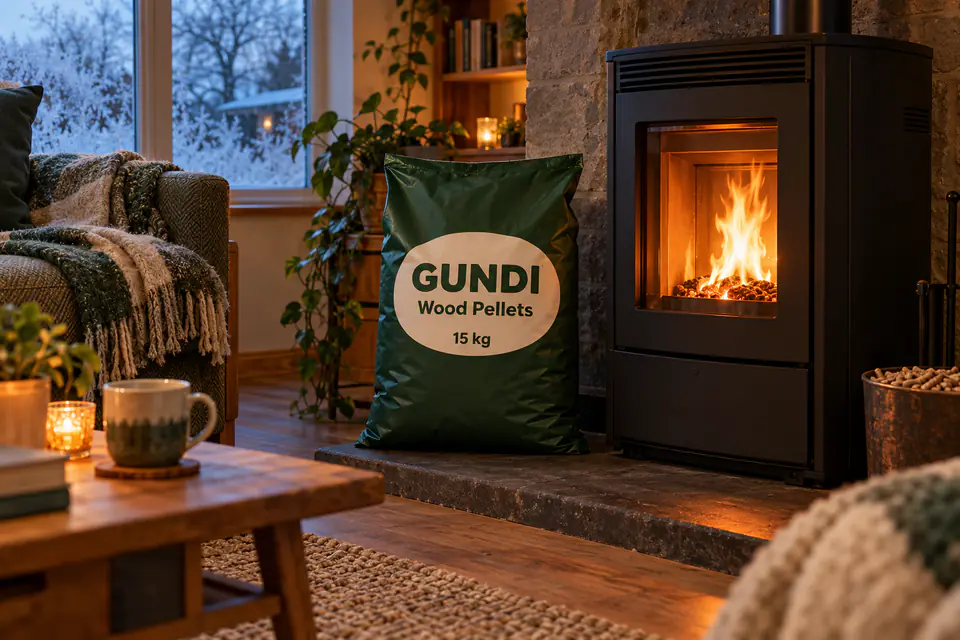
There is a pattern every pellet supplier knows. The first properly cold morning arrives, the forecast shows a frost, and by lunchtime everyone in the county wants a pallet by Friday. Then the lorries are busy, the warehouse is thin on 10 kg bags, and somebody ends up in the car park of a garden centre, wrestling bags into a hatchback.
Today we are launching our “Stock up before the frost” campaign, and this post is the practical version: how much you will really need, how to store it, and when to order.
How much do you actually burn?
It depends on the appliance, the house and the winter, but these ballpark figures will get you started. They assume ENplus A1 pellets with a heating value of roughly 4.6 kWh per kg.
| Setup | Typical winter month | Whole heating season |
|---|---|---|
| Room stove, used evenings and weekends | 150 to 300 kg | about 1 to 1.5 tonnes |
| Room stove, main heat source | 350 to 500 kg | about 2 to 3 tonnes |
| Boiler in a 3-bed house, heating and hot water | 300 to 500 kg | about 3 to 4 tonnes |
| Small commercial or school boiler | 2 to 6 tonnes | 15 to 30 tonnes |
Over the year, expect the coldest two or three months to account for around half your total use. Hot water alone, in summer, is typically 50 to 100 kg a month.
If you are not sure, last year’s delivery notes are the best guide. Failing that, rule of thumb: divide your annual heat demand in kWh by about 4,000 to allow for appliance efficiency, and you get roughly the tonnage.
Bags, pallets or bulk?
- 15 kg bags are easy to carry and store in a shed or garage. A pallet of 65 bags is 975 kg, which suits a stove or a small boiler through most of the winter. At the time of writing a 15 kg bag costs about £7.25 and a pallet about £419 including VAT.
- 10 kg bags are easier to lift, but they cost a little more per kilo.
- Bulk delivery is blown into a silo or hopper by one of our tankers. At about £335 per tonne it is the cheapest per kilo, but you need a suitable store and vehicle access. We deliver bulk within about 60 miles of Nottingham.
- Big bags sit in between, if you have space for a one-tonne sack and a way to move it.
Prices change, so check the website before ordering.
How to store pellets properly
Pellets are made of compressed wood, and wood does what wood does with water: it drinks it. Damp pellets swell, crumble and turn into sawdust. Good storage is not complicated:
- Keep them dry. A shed, garage or outbuilding with a sound roof is fine. Never leave bags uncovered outside.
- Raise them off the floor. Pallets or timber battens allow air under the stack and avoid rising damp and condensation.
- Leave the plastic on. Bags are sealed for a reason. Don’t open one before you are ready to use it.
- Keep them away from heat and fuel. Not next to your tin of paint thinner, then.
- Don’t stack too high. Four or five bags high is safe and stable.
- Silos and hoppers. Check before delivery that the store is dry, clear of old dust and sealed to rain. Dust is flammable, so vacuum the store from time to time instead of sweeping.
- Use older stock first. Pellets last well if kept dry, but it is still good practice.
When to order
In a mild week, pallet orders within our delivery area usually arrive within a few days. In a cold snap, every household in the county rings the same morning, and lead times stretch. Bulk deliveries need a slot on one of two blower tankers, so they book up the fastest.
My own recommendations:
- Order before the first hard frost, which in Nottingham is often mid-to-late October, not December.
- Book bulk deliveries early. Two weeks’ notice is a good habit.
- Top up, don’t wait to run out. Order when your store is a third full, not when you are scraping the bottom.
- Check the access. Make sure our driver can reach your store, with gates unlocked and no parked cars across the route.
A little anecdote
When Chris started out, he stocked up on firewood each September as if he were storing grain for a siege. His family teased him until the first cold week arrived. We like to think the campaign is the corporate version of that sensible streak, minus the siege.
What to do now
If you have not already, check your storage, estimate what you will need and place an order. It is a small chore that saves a very cold evening. And if you are still unsure how much to buy, our team will help you work it out. Ask for Sebastian if you run a business, or call our office if you heat a home.