How to tell good pellets from bad

Margaret, Marketing Manager (fictional)
Every autumn the same question lands in our inbox: “These pellets were cheaper, so what’s the catch?” Sometimes there is no catch. Quite often there is, and you find it at 10pm in January when the stove is sulking and the ash pan is full again.
The good news is that you can learn a lot about a bag of pellets with your eyes, your nose and a bucket of water. Here is the checklist we use ourselves, before the lab gets involved.
1. Look for the certification mark first
Start with the bag, not the pellets. A genuine ENplus bag carries the ENplus logo, the grade (A1, A2 or B) and the producer or supplier’s certificate number. That number can be checked on the public ENplus register. If the bag only says “premium” or “100% wood” in a flourish of green leaves, treat that as marketing, not evidence.
Grade matters because it sets hard limits on ash, moisture, durability and heating value. We explain the numbers in our post on what ENplus A1 actually means, but the short version is that A1 is the cleanest, lowest-ash grade, and the one most domestic stoves and boilers are designed for.
2. Check the surface
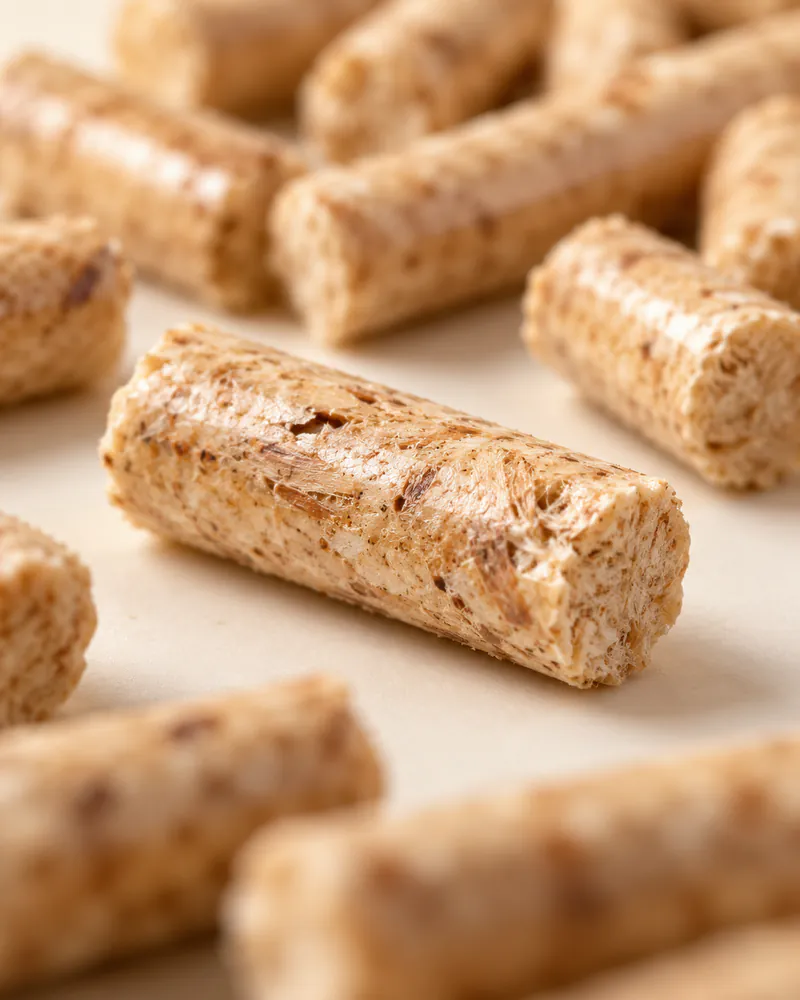
Good pellets have a smooth, slightly glossy surface with clean, square-cut ends. That shine comes from lignin, the natural glue in wood, softening under heat and pressure in the die and then setting as the pellet cools. Dull, cracked, furry or flaking pellets usually mean poor compression or damp raw material.
Colour varies with the wood. Pine-heavy pellets look pale and golden, hardwood blends are darker. Colour on its own tells you very little, but a patchy bag with several shades and visible bark flecks suggests the feedstock was not well controlled.
3. Do the dust test
Tip about a litre of pellets into a clean bucket and look at what is left at the bottom. A thin dusting is normal, because pellets rub against each other on every lorry and conveyor between mill and your shed. A layer of sawdust, or a bag that puffs a cloud when you open it, is a bad sign.
Fines matter for more than tidiness. They block feed augers, burn unevenly and make a mess of your hopper. ENplus A1 limits fines to 1% at the point of delivery, which is why we sieve samples from every batch.
4. Snap one and smell it
Take a pellet in both hands and bend it. A well-made pellet snaps with a clean break rather than crumbling into powder. A soft pellet that squashes or falls apart is low in durability and will turn to dust in the hopper.
Then smell it. Fresh wood pellets smell of warm sawdust, sometimes faintly sweet. Anything musty suggests damp storage or mould, and anything chemical, acrid or oddly sweet should go straight back where it came from. It may mean contaminated feedstock such as painted or treated wood.
5. The water test
Drop a few pellets into a glass of water. Good pellets sink, because they are dense, and then swell and break up into sawdust over a minute or two. Pellets that float, or collapse into mush instantly, are either low density or badly bonded.
It is not a laboratory method, but it is quick, cheap and surprisingly telling.
6. Judge them by what they leave behind
The most honest test is the burn. Over a few weeks, notice:
- Ash volume. A1 pellets leave very little, under 0.7% of the pellet’s weight. If you are emptying the ash pan every few days, something is off.
- Clinker. Hard, glassy lumps in the burn pot often point to dirt, bark or mineral contamination.
- Glass and flame. Sooty stove glass or a lazy, smoky flame can mean wet pellets or the wrong grade for your appliance.
- Feed problems. Frequent auger jams can be fines, or oversized pellets.
A quick summary table
| What you see | Likely meaning |
|---|---|
| Shiny, uniform, clean ends | Well compressed, good die conditions |
| Powder at the bottom of the bag | High fines, or rough handling |
| Pellets that crumble when bent | Low durability |
| Musty or chemical smell | Damp storage or contaminated feedstock |
| Lots of ash and clinker | Higher-ash grade, or dirty wood |
Storage counts too
Even excellent pellets can be ruined by a damp shed. Keep bags off the floor, out of rain and away from condensation, and don’t open a bag until you need it. Pellets take on moisture quickly, swell and turn to sawdust, and then your stove pays the price.
Our approach
At The Fuel Works in Bulwell we sample every batch, test moisture, ash, durability and fines in our own lab, and hold the batch until it is released. We also send samples to an external UKAS laboratory every month as a cross-check. We would rather you never have to run the bucket test on our pellets, but if you want to, go ahead. We’re not hiding anything in the undergrowth.
If a bag ever disappoints, tell us the batch code printed on it and we’ll look into it properly.