From pallet to pellet: why pallet wood is grade B only

Chris, CEO (fictional)
I spent a fair few years in a sawmill before starting Gundi, and one thing I learned early is that wood is never just wood. A kiln-dried pine offcut from a joinery and a battered pallet from the back of a warehouse are the same species on paper. In a pellet mill they behave very differently.
This post explains why we take in clean pallet wood, why we put it into industrial grade B pellets and nothing better, and why some wood never gets through the gate at all.
Why pallet wood is worth saving
The UK uses a colossal number of pallets. Many are repaired and reused several times, but eventually they split, rot or get run over by a forklift, and the broken ones have to go somewhere. Left to themselves they end up in landfill or burned without much benefit. Turning them into fuel is a sensible use of a material that has already done years of useful work.
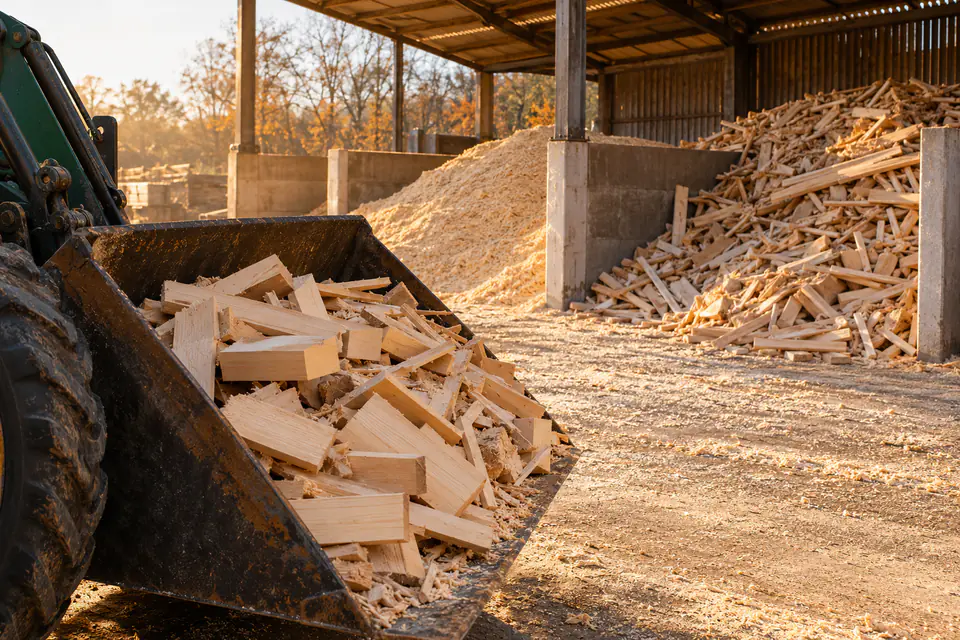
Specialist recyclers such as Midlands Pallet Recycling dismantle and sort pallets, remove nails and chip the wood. We then screen, mill, dry and press it. Our L2 line, “Friar Tuck”, makes most of our industrial grade B pellets from this material for poultry farms, glasshouse growers and industrial boilers.
Why it can never be A1 or A2
ENplus is strict about two things: where the wood came from, and how clean the finished pellet is. Pallets fail the first test almost by definition. Even a pallet that looks clean has had a long life:
- Unknown history. It may have carried chemicals, oil, fertiliser or food spills.
- Contaminants. Dirt, grit and dust cling to old wood and push ash up.
- Glue and fixings. Nails, staples and resins from repairs or from plywood blocks end up in the stream.
- Chemical treatment. Some pallets are heat-treated, but others have been chemically treated, and not always legibly marked.
- Higher ash. Dirt and bark-heavy edges mean mineral content, and mineral content becomes ash.
Grade B allows up to 2.0% ash, against 0.7% for A1 and 1.2% for A2. Mechanical durability must still be at least 97.5% and the heating value at least 16.5 MJ/kg, so a good grade B pellet is a perfectly decent fuel. It is just built for boilers designed to handle more ash, not the compact stove in your living room.
So our rule is simple and we never bend it: clean, untreated pallet wood is grade B at most. It does not go into A1 or A2, however nice it looks.
The wood we reject
Our environmental permit allows us to accept non-hazardous grade A wood only. In practice that means untreated, clean timber. At goods-in, our team in the weighbridge office will reject:
- painted, varnished or stained wood
- pressure-treated or preservative-treated timber
- demolition and construction waste
- MDF, chipboard, plywood and other glued board
- timber with plaster, concrete or heavy contamination
Why so firm? Burning treated or painted wood can release heavy metals and other nasties from the chimney, and the residues end up concentrated in the ash. Boards bound with resin can raise nitrogen emissions. And in the mill, a single stray nail will wreck a die in seconds.
A load may look fine from the cab. We still inspect it at the weighbridge, tip it for a visual check and record the result. A rejected load goes back with a note, not a bargain.
What happens in the plant
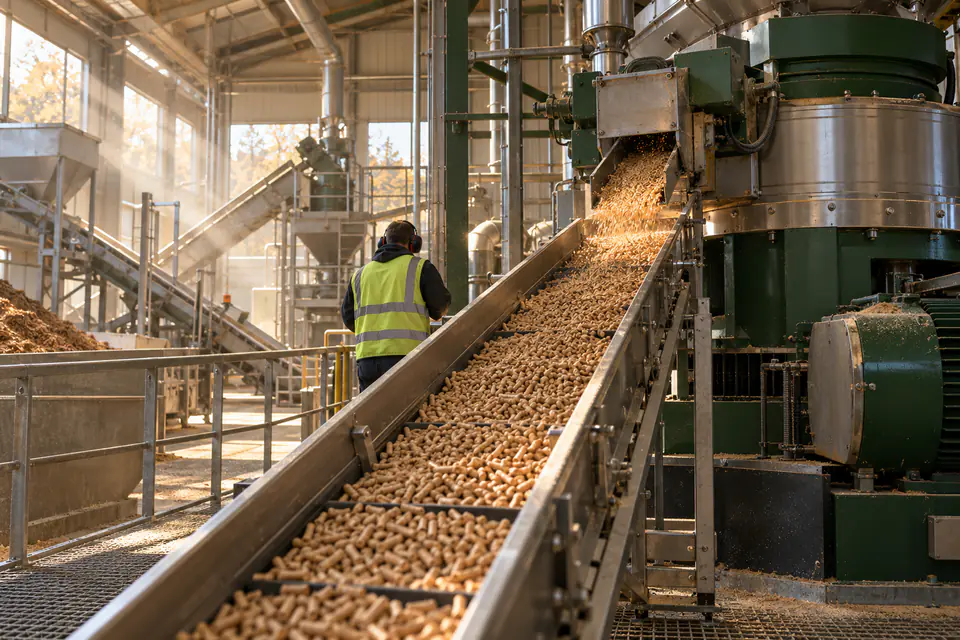
Even clean pallet wood gets a full process:
- Visual inspection and weighbridge record at goods-in
- Metal removal by magnets and detectors
- Screening to remove stones, soil and oversize
- Hammer milling to a consistent particle size
- Drying on our belt dryer, “the Sheriff”, to a controlled moisture
- Pelletising, cooling and screening of fines
- Sampling, lab testing and batch hold until release
Nothing on that list is optional. The Sheriff is relentless about wet material, and it would be delighted to turn away a load of damp pallet chip if it could speak.
Why this matters to you
If you buy industrial grade B from us, you get a lower-cost fuel with a transparent history, produced and tested to the B limits. If you buy A1 or A2, you can be sure none of it began life as a pallet. It comes from clean offcuts, shavings and sawdust from sawmills and joinery shops. That separation is the whole point of a certified scheme: the grade on the bag tells you something real.
Pallets have had one career already. We are glad to give them a second, as long as everyone is honest about what that second career is.
If you run a pallet yard or a workshop and want to talk about supplying clean wood, get in touch. We promise to be as friendly as the Sheriff is not.